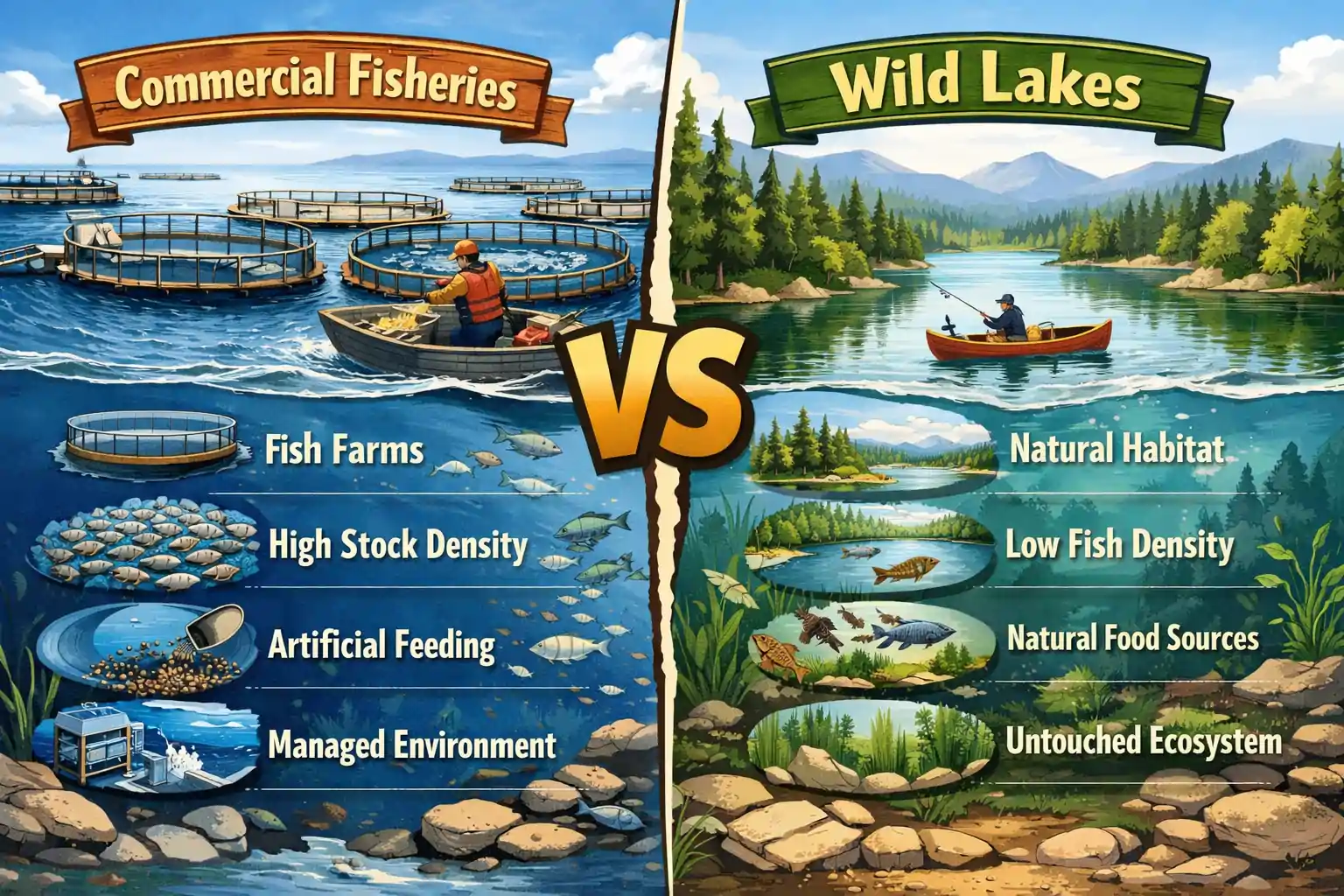
Baiting strategy changes dramatically depending on whether you are fishing a commercial carp fishery or a more natural, wild lake. Stock levels, carp size, angling pressure, and available natural food all influence how much bait to use and how you apply it. Understanding these differences will help you avoid overbaiting and improve consistency.
Baiting on Commercial Fisheries
Commercial fisheries typically hold a high number of carp, often smaller on average, and are subjected to heavy angling pressure. Carp on these waters see a lot of bait and rigs, which makes subtlety far more important than volume.
- High stock levels mean carp are always nearby.
- Smaller carp dominate feeding activity.
- Fish are used to anglers and common bait approaches.
- Light, tactical baiting usually outperforms heavy feeding.
On commercials, start with small amounts of bait and build only if bites come quickly. Hookbait choice is often more important than bait quantity.
- Small amounts of pellets are ideal for attraction.
- Wafters and pop-ups help avoid nuisance fish.
- Bright hookbaits can help stand out in pressured swims.
This approach is especially useful for newer anglers, which is covered further in our beginner guides.
Baiting on Wild or Low-Stock Lakes
Wild lakes and older pits usually contain fewer carp, but the fish are often larger and more cautious. These waters also tend to have a greater amount of natural food available.
- Lower stock means you need to draw carp into your swim.
- Bigger carp require confidence to feed properly.
- Natural food competes with your bait.
On these venues, larger beds of bait can be very effective once carp locate the area.
- Introduce more boilies to create a feeding zone.
- Combine boilies with particles for natural attraction.
- Use food-based baits to encourage repeat visits.
Matching Baiting Style to Carp Behaviour
The biggest mistake anglers make is using the same baiting approach everywhere. Let carp behaviour guide your decisions.
- Quick bites and liners suggest feeding fish, top up lightly.
- No signs of activity may mean reducing bait or relocating.
- Once confidence feeding starts, maintain it with steady baiting.
More advanced baiting strategies are explained in our bait guides.
Seasonal Considerations
Season also affects how much bait carp will tolerate on both venue types.
- Winter: Light baiting is best everywhere. See our winter carp bait guide.
- Summer: Wild lakes often respond well to increased baiting. Learn more in our summer carp bait advice.
Final Thoughts
On commercial fisheries, go light and tactical due to high stock levels and angling pressure. On wild lakes, where carp are fewer but larger, bigger beds of bait often work better once fish are located. Adjusting your baiting approach to suit the venue will consistently put more carp on the bank.