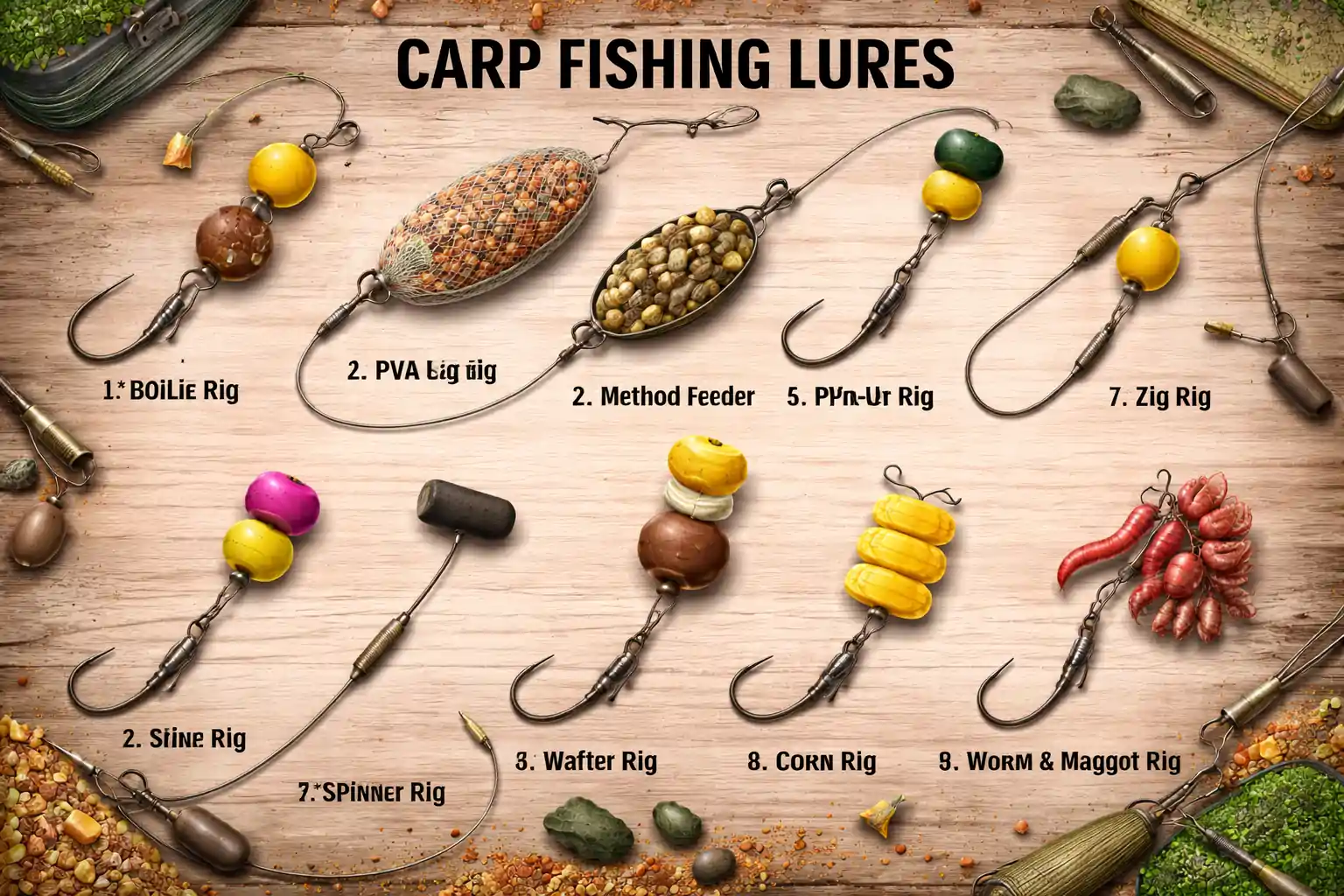
Lures can catch carp in UK lakes, but they sit firmly in the niche category. Carp are not predatory fish in the traditional sense and are far more driven by scent, taste, and food signals than by movement. Because of this, lures tend to work through curiosity rather than feeding behaviour, which makes them unreliable as a main tactic.
Why Carp Occasionally Take Lures
When carp are caught on lures, it is usually not because they are hunting, but because something unusual has triggered an investigation.
- Small soft plastics can mimic movement near the mouth.
- Subtle motion can provoke curiosity in inactive fish.
- Most takes are accidental or exploratory.
These takes are rare and unpredictable, which is why lure fishing for carp has never become a mainstream approach.
Why Traditional Bait Is More Reliable
Carp spend most of their time grazing, sifting, and feeding on natural and introduced food items. This makes bait-based approaches far more effective and repeatable.
- Bait provides scent, taste, and nutrition.
- Carp actively search for food rather than movement.
- Bait allows you to hold fish in a swim.
Proven options such as pellets, particles, and boilies consistently outperform lures in UK lakes.
Better Alternatives to Lures
If the goal is to create subtle movement or stand out without abandoning bait, there are far better options than lures.
- Wafters offer gentle, natural movement.
- Pop-ups stay visible above debris and silt.
- Lightly boosted hookbaits provide attraction without suspicion.
These presentations work with carp feeding behaviour rather than against it.
When Lures Might Be Worth a Try
Although not consistent, there are situations where experimenting with lures can be interesting.
- Highly pressured waters where carp ignore standard baits.
- Clear water where carp are visibly inspecting objects.
- Very slow sessions where experimentation carries little risk.
Even in these scenarios, a carefully presented bait will usually outperform a lure.
Beginner Advice
For most anglers, especially beginners, lures are not worth focusing on. Learning bait placement, presentation, and watercraft will catch far more carp over time.
Our beginner guides and detailed bait guides explain how to build consistent results using proven baiting methods.
Final Thoughts
Lures can catch carp, but they work through curiosity rather than feeding and are not a consistent method on UK lakes. They can be a fun experiment, but for reliable carp fishing, traditional baiting approaches remain far superior.